Retention was flatlined. I designed a gamification engine that boosted weekly active users by 27% in 30 days.
Overtime had nailed onboarding. Users were signing up, funding wallets, even placing first bets. But they weren't coming back.
Here's a paradox: Overtime offered better odds, full transparency, and self-custody — objectively better than centralized sportsbooks. Yet users treated it like a curiosity, not a habit. The product was winning on logic but losing on behavior.
The core question I was tasked with answering: how do you make a decentralized product feel worth returning to — every single day?
My Role
Senior UX/UI Designer responsible for the end-to-end gamification system: concept development, game mechanic design, user flow architecture, UI module design, microcopy, and the progression/reward framework. I collaborated with a product manager, 2 blockchain developers, and a data analyst over a 7-month sprint.
The Problem
Users bet once and left — there was no reason to come back
Despite the appeal of decentralized betting — transparent odds, self-custody, no house edge manipulation — users treated Overtime like a curiosity rather than a habit. The core question I was tasked with answering:
“How can we turn sporadic betting into sustained, high-value user behavior without compromising the principles of self-custody and transparency that make Overtime different?”
problem
Why traditional gamification wouldn't work here
My first instinct was to study what traditional sportsbooks do: deposit bonuses, free bets, cashback promotions. But Web3 is a fundamentally different environment, and I quickly realized that transplanting Web2 retention mechanics would fail for three reasons:
No house control over funds
Traditional sportsbooks can lock bonus funds behind wagering requirements because they custody user money. In a self-custody model, users own their assets. Any “lockup” mechanic would violate the core product principle.
Token economics add a dimension
Overtime’s native $THALES token wasn’t just loyalty points — it was a tradeable asset with real market value. This meant the gamification system couldn’t just “give away tokens” without careful economic design.
The audience is skeptical
Web3 users have been burned by countless “gamified” ponzi schemes and unsustainable airdrop campaigns. Any system that felt like artificial engagement farming would trigger immediate distrust.
The Solution
The Overdrop League: a seasonal engagement layer — “Battle Pass meets sports betting” — built around earned status, not purchased status.
I designed a system built on three pillars: XP earned through real betting activity, progression through thematic tiers, and token rewards that scaled with genuine engagement.
The key design principle: every XP point had to come from an action the user genuinely wanted to take. No artificial tasks, no busy work, no engagement theater.
System Design
The six mechanics that made every bet count
I designed the Overdrop League around XP earned through real betting activity, progression through thematic tiers, and token rewards that scaled with genuine engagement. The key design principle: every XP point had to come from an action the user genuinely wanted to take.
XP calculation logic
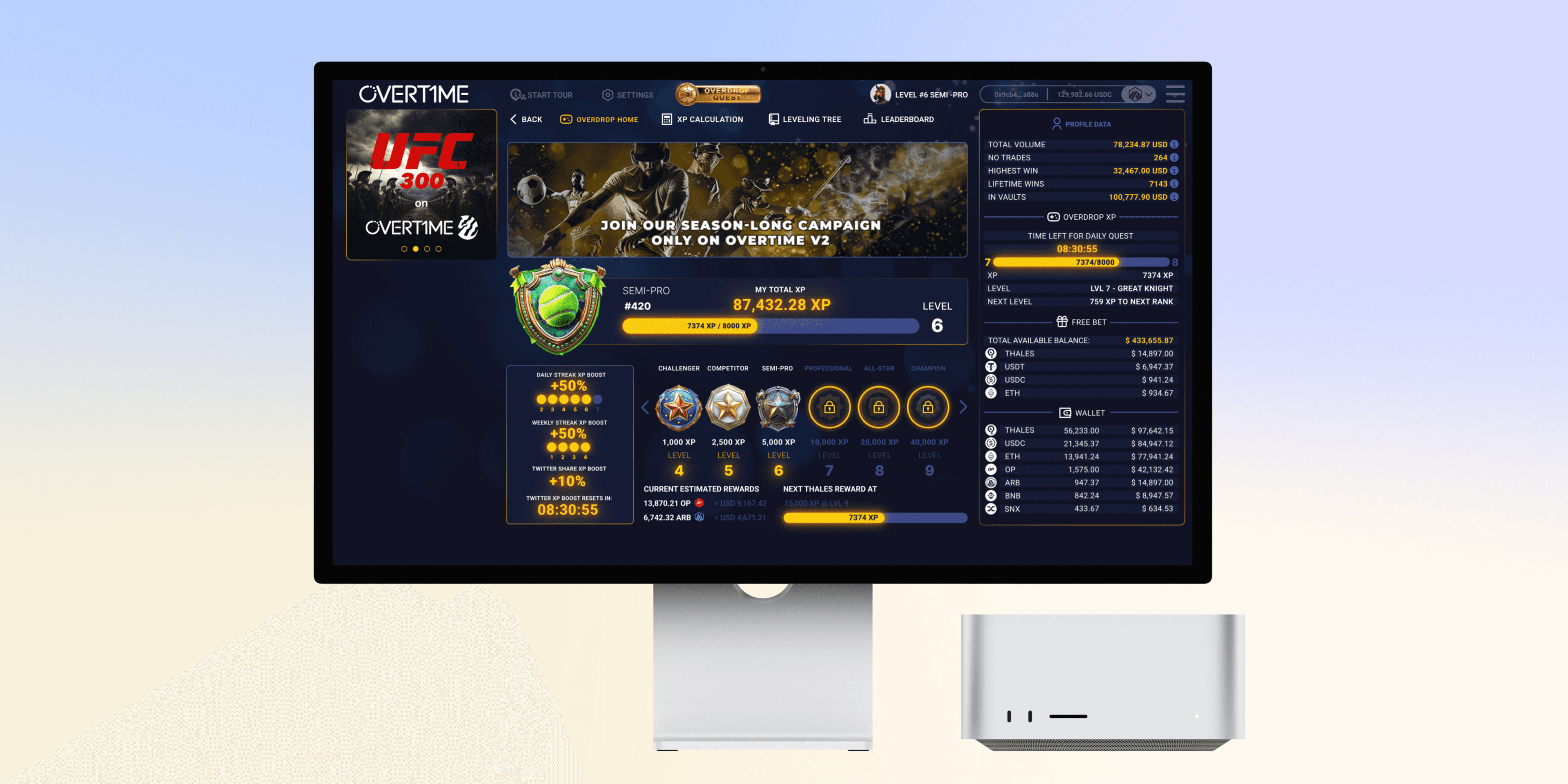
A transparent formula: XP = Buy-in × (2 - Normalized Odds). This rewarded both stake size and risk-taking. I insisted on making the formula visible within the UI — not hidden in a FAQ. Transparency was the product principle.
Streak bonuses
Daily and weekly streak multipliers drove routine engagement. I tested three versions of the streak UI: a simple counter, a calendar grid, and a flame icon with intensity levels. The flame won — immediately readable, emotionally resonant, compact.
Parlay & risk incentives
Parlays and underdog picks earned bonus XP. This solved a business problem too: parlay bets have higher margins. I drove revenue-positive behavior through positive reinforcement rather than manipulation.
Progression framework
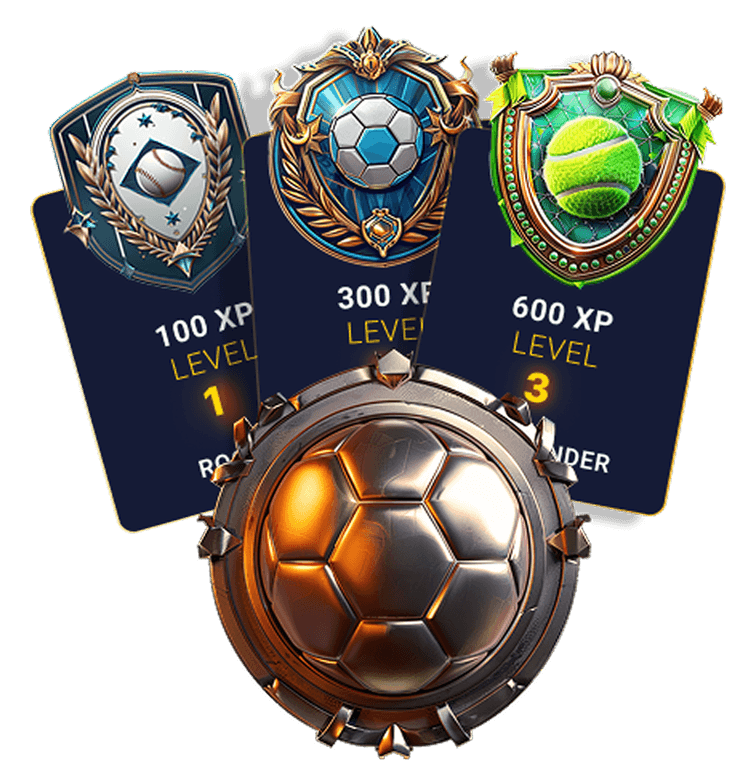
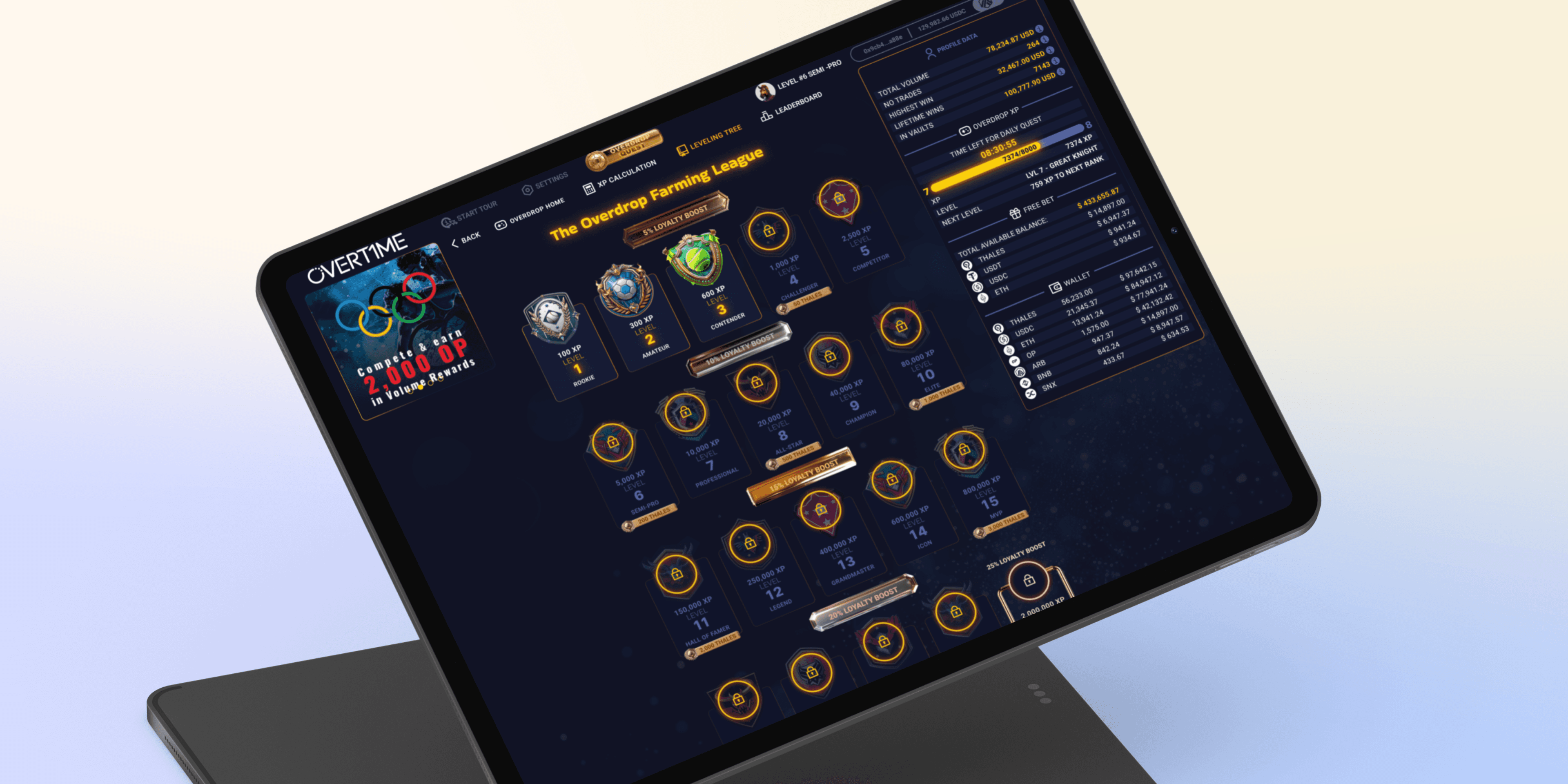
16 thematic levels from Rookie (100 XP) to the final tier. Early levels were fast (immediate gratification), middle levels required consistent weekly activity (habit building), top levels demanded months (aspiration). I worked with a data analyst to calibrate the curve.
Token utility
Betting with $THALES granted a permanent +10% XP boost and milestone-based free bets. “Use THALES, earn faster” was far more compelling than “buy our governance token.” I designed a persistent “Active XP Bonuses” panel showing exactly which boosts were stacking.
Social sharing hook
A +10% XP boost for sharing bet slips on Twitter. One tap. Auto-formatted shareable image with branding, odds, and the user’s level badge. This was the viral loop — every shared bet slip was a mini-advertisement seen by the exact target audience.
UX Deliverables
What I designed and shipped
Gamified UI modules
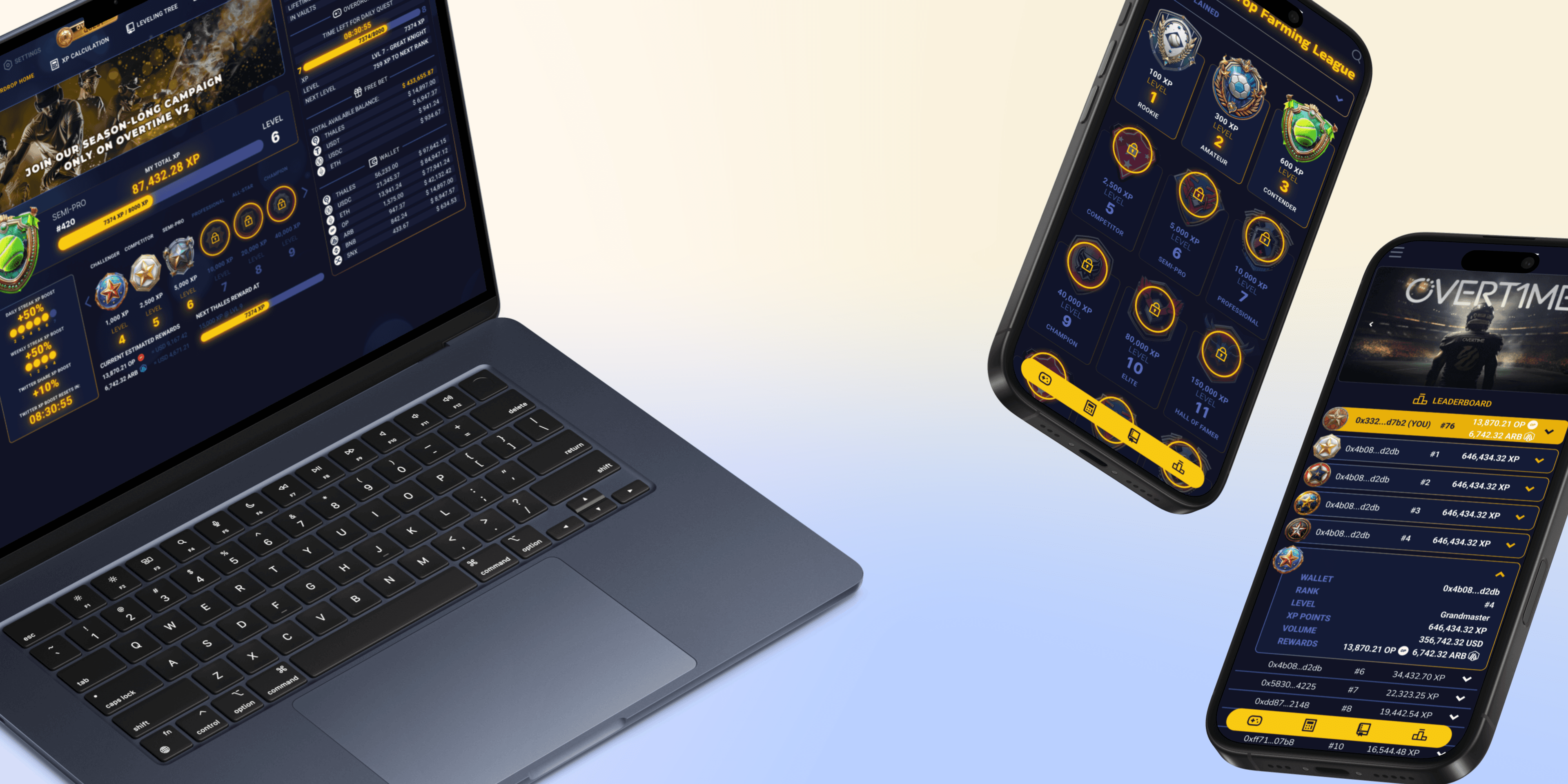
Modular XP dashboards with progress bars, level indicators, and embedded tooltips. Every number was interactive — hover over your XP total to see the breakdown by bet type, streak bonus, and token boost. The progress bar to the next level was always visible, creating a persistent “just one more bet” pull.
Leaderboard interaction model
A sortable, paginated leaderboard showing user ranks, XP totals, levels, and growth trends. I added “View Profile” links that displayed a user’s public stats (total volume, lifetime wins, highest streak) — turning the leaderboard from a static ranking into a social discovery tool.
Microcopy & feedback systems
Every XP-earning moment had immediate feedback: a floating “+X XP” animation on bet confirmation, a streak milestone toast notification, a level-up celebration modal with the new badge prominently displayed. I wrote all the microcopy to be concise, celebratory, and on-brand.
Results
The 27% DAU increase came from design, not marketing spend
27%
Increase in weekly active users within 30 days of launch
35%
Boost in bet volume, particularly among mid-stake users
4.2x
Higher retention rate for Overdrop participants vs. non-participants
“I stopped farming airdrops on other platforms. The quests on Overtime actually make me want to bet more — it doesn't feel like grinding, it feels like playing.”
Overdrop League participant, Season 2
What I Learned
The best gamification doesn't feel like a game bolted on — it feels like the product was always meant to work this way
Gamification isn't about adding points and badges to an existing product. It's about understanding what behavior you want to encourage, designing mechanics that make that behavior feel rewarding, and building feedback loops that make progress visible and social.
What worked: The XP formula and milestone tiers were intuitive and self-reinforcing — users understood the system within their first session. Microinteractions and progress visuals reinforced motivation without cognitive overload. Token incentives tied to real behavior gave $THALES genuine product utility.
What I'd do differently: Build a mission engine that serves personalized goals based on betting history. Expand the social layer with team-based competitions and friend leagues. Design first-time user challenges that teach the gamification system while rewarding progress — onboarding the game loop itself.