50,000 users were never supposed to touch a crypto wallet. I made sure they didn't have to
I redesigned the onboarding and account experience for the onchain sportsbook — where someone could go from “I've never used crypto” to “I just placed my first bet” without ever needing to understand private keys, gas fees, or smart contracts.
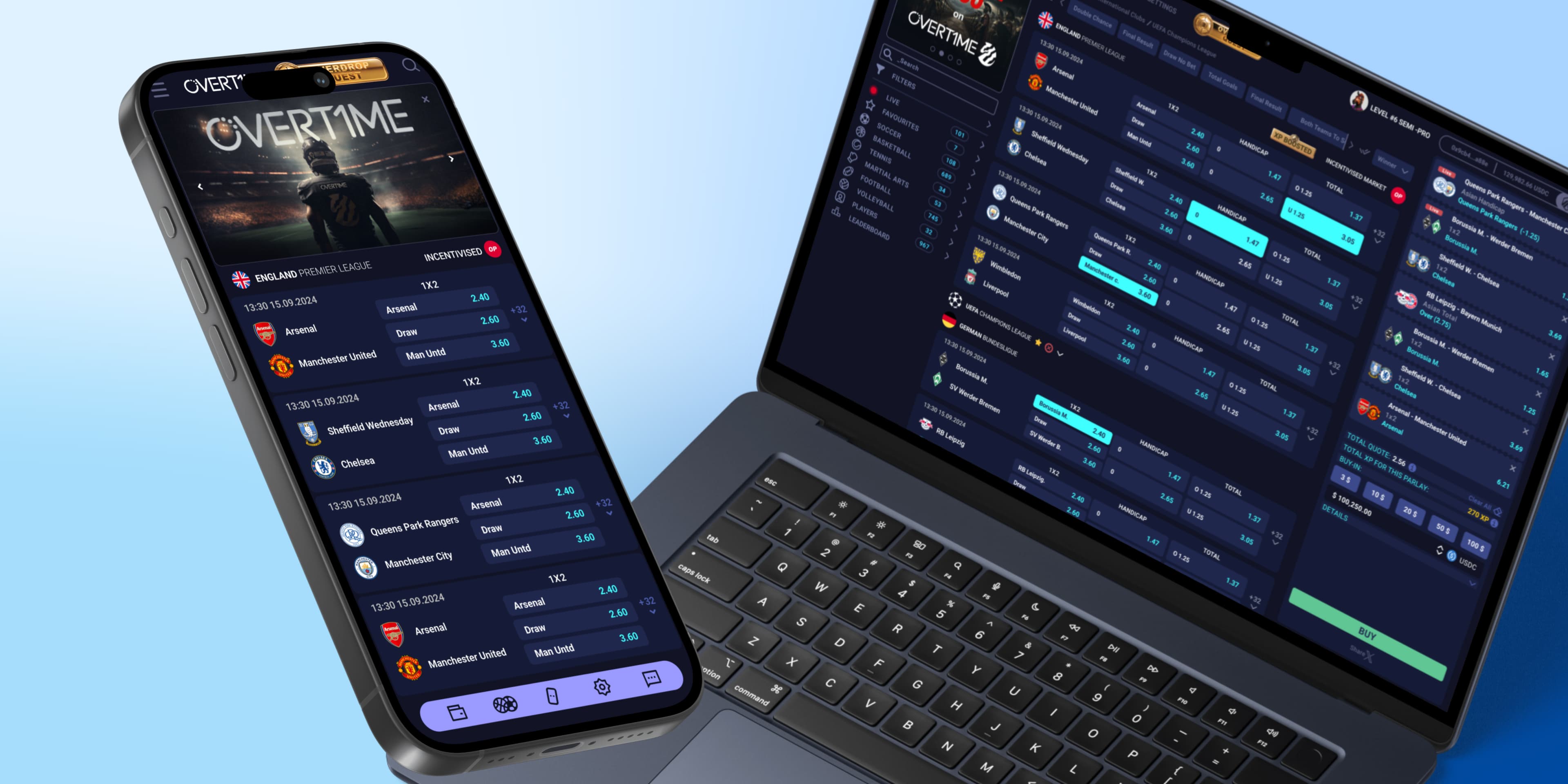
My Role
Product and UX/UI Designer working within a cross-functional team alongside blockchain engineers, a product manager, and a front-end developer. I was part of the Growth team too. I owned the onboarding redesign, account abstraction UX, wallet management flows, and the deposit/withdrawal experience. I also contributed to the betting interface and the overall design system.
The Problem
Seven steps before a single bet. Each step was a cliff where users fell off.
When we start building Overtime, it had a classic Web3 adoption wall. The first onboarding flow required users to: install a browser wallet extension, create a wallet and store a seed phrase, purchase cryptocurrency on a separate exchange, transfer it to their wallet, connect the wallet, approve a smart contract transaction, and finally place a bet.
The best Web2 sportsbooks got users from sign-up to first bet in under 90 seconds. That became our benchmark — not because we could match it immediately, but because it reframed the problem from “how do we explain crypto?” to “how do we hide it?”
Research
Three critical drop-off zones killing conversion
I mapped the existing onboarding funnel, benchmarked against traditional sportsbooks (DraftKings, Bet365, FanDuel) and crypto-native competitors, and identified where users gave up:
Wallet Setup (Steps 1–3)
68% abandoned“What is MetaMask? Why do I need a browser extension to bet?”
The very first step was an immediate dealbreaker. The concept of a wallet extension for a sportsbook didn’t match any existing mental model. The seed phrase concept was actively frightening.
Funding (Steps 3–4)
Exchange bridge failures“I have to buy ETH somewhere else first, then move it here?”
Even crypto-aware users struggled with bridging funds from exchanges to the correct network. Wrong chain, wrong token, stuck transactions — the support tickets told the story.
Transaction Approval (Step 6)
Fee confusion“Why am I paying $3 in fees to place a $5 bet?”
Gas fees were unpredictable and confusing. Users felt nickel-and-dimed by infrastructure they didn’t understand. Network switching and transaction confirmations were incomprehensible to Web2 users.
The Strategic Bet
From “teach users to be crypto-native” to “let them be sports bettors who happen to use blockchain infrastructure.”
The core design decision — and the one that changed everything — was to implement account abstraction. Rather than requiring users to bring their own wallet, Overtime would create a smart contract wallet for them automatically, behind the scenes, the moment they signed up with Google, Discord, Twitter, or Apple.
This wasn't just a UI change. It was a philosophical shift: from “teach users to be crypto-native” to “let them be sports bettors who happen to use blockchain infrastructure.”
what i acctually did
Designed a “zero-knowledge” onboarding flow
I use “zero-knowledge” deliberately — not the cryptographic kind, but in the UX sense. The goal was that a user should need zero prior knowledge of blockchain to sign up and place their first bet.
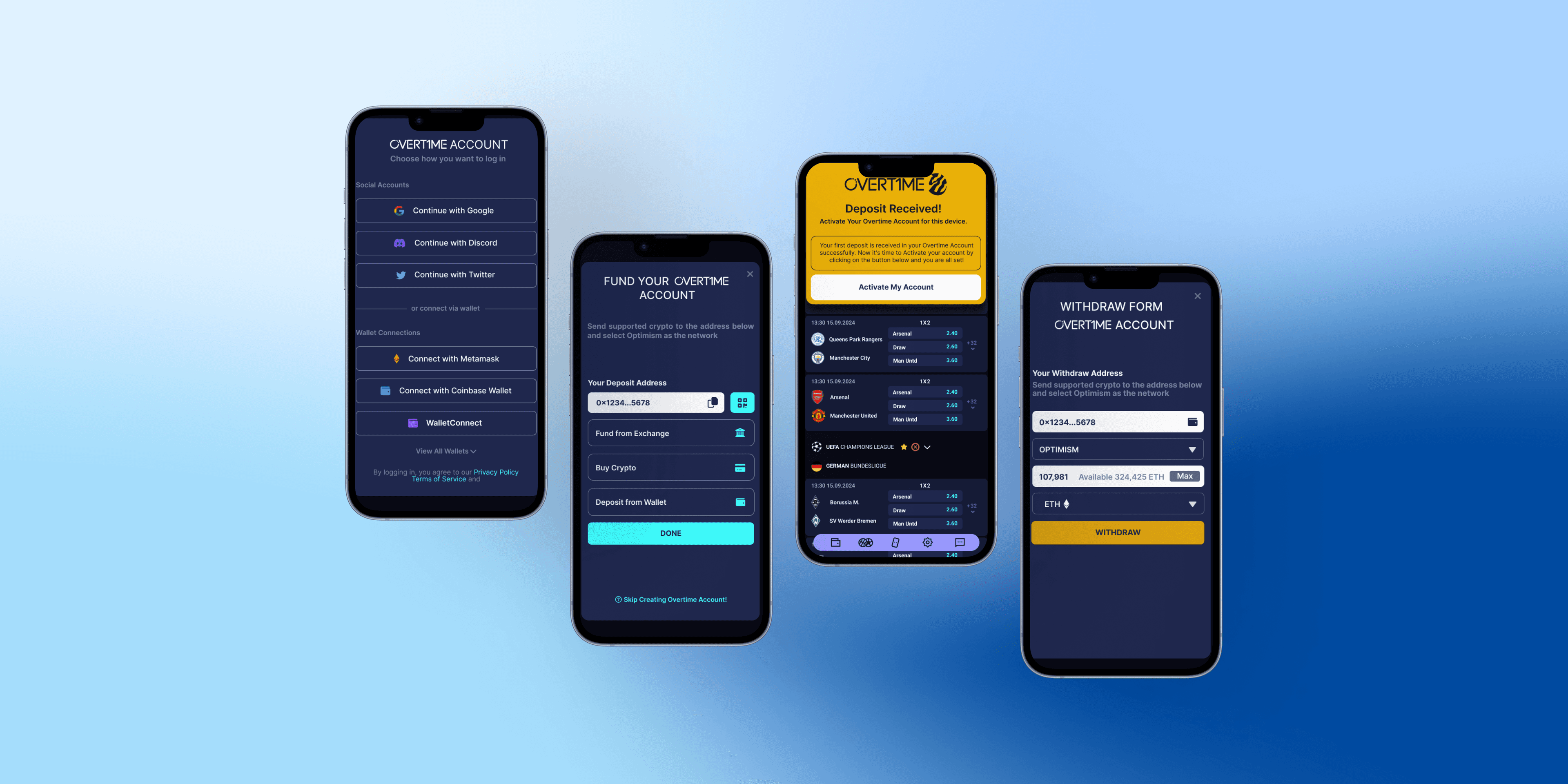
I designed the new flow in three layers: frictionless entry, simplified funding, and invisible infrastructure. The result: sign up, fund account, place bet. Three steps. Under 2 minutes. No wallet jargon.
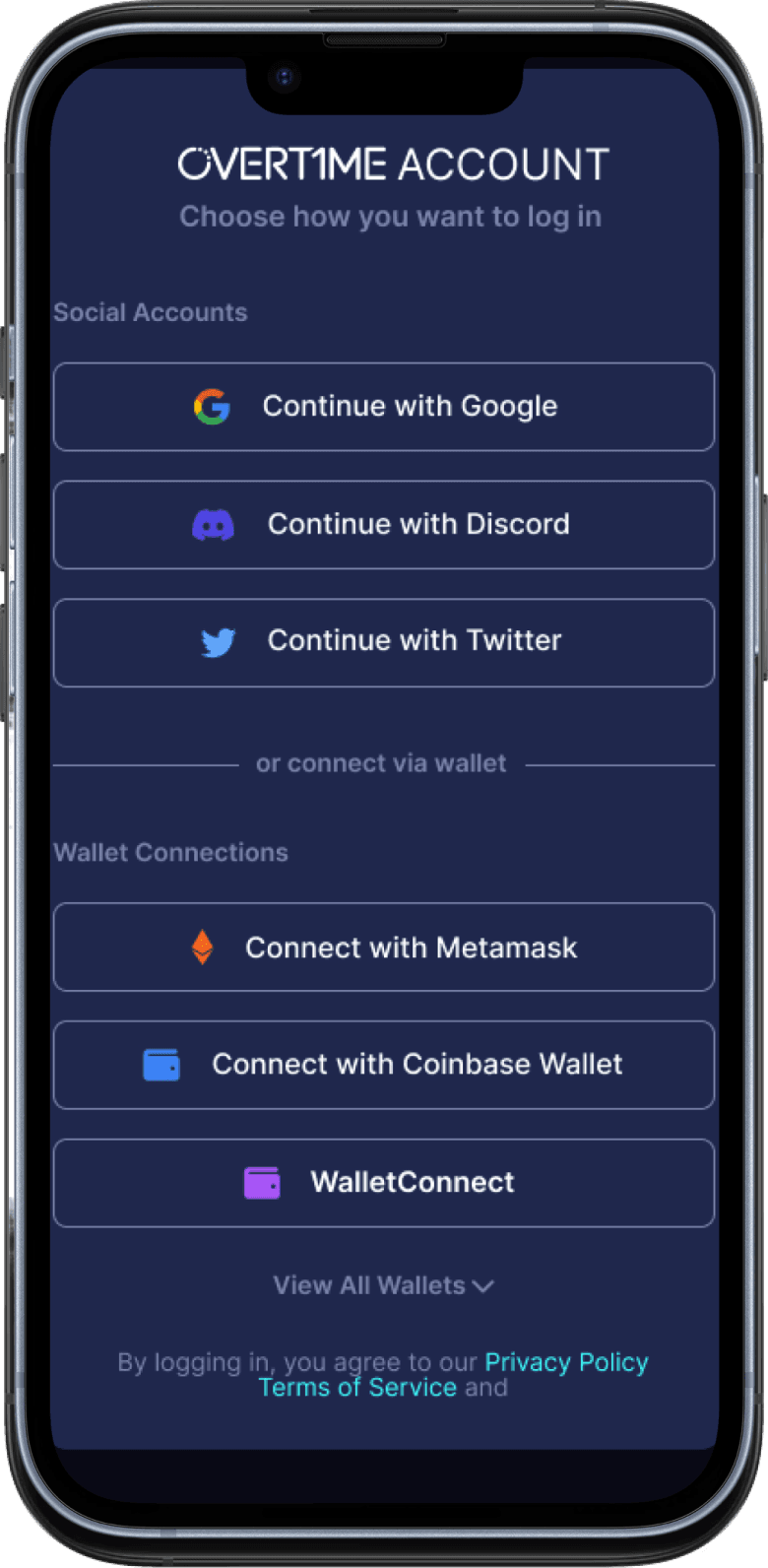
Layer 1: Frictionless Entry
Social logins (Google, Discord, Twitter, Apple) prominently at the top, with “Connect with Wallet” as a secondary option. Choosing “Sign Up with Google” triggers automatic smart contract wallet creation — no seed phrase, no network selection, no contract approval.
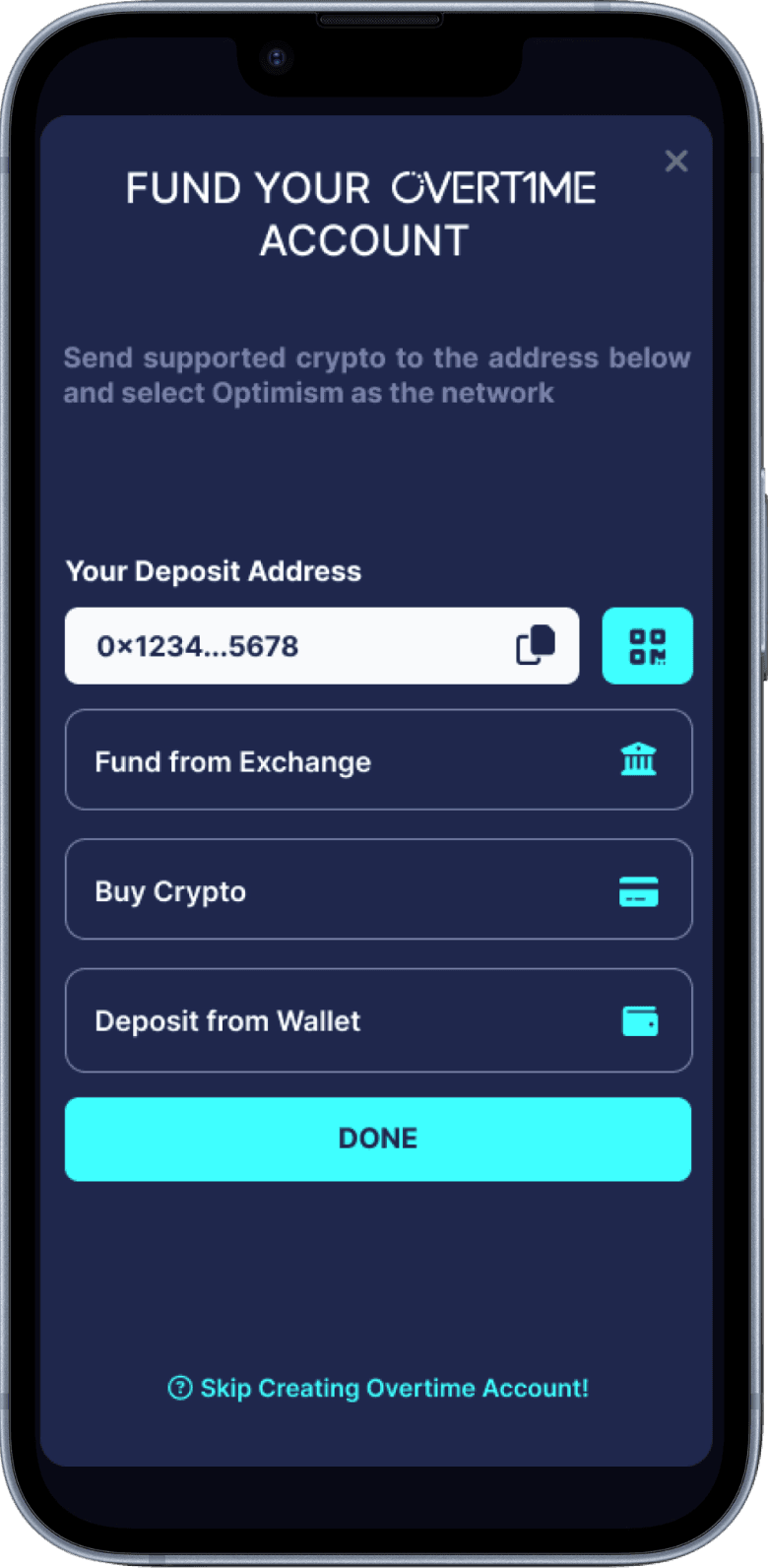
Layer 2: Simplified Funding
Three parallel paths: Buy Crypto (integrated fiat on-ramp with credit card, Apple Pay, Google Pay), Deposit from Wallet, and Fund from Exchange. “Buy Crypto” positioned as the default, most prominent option.
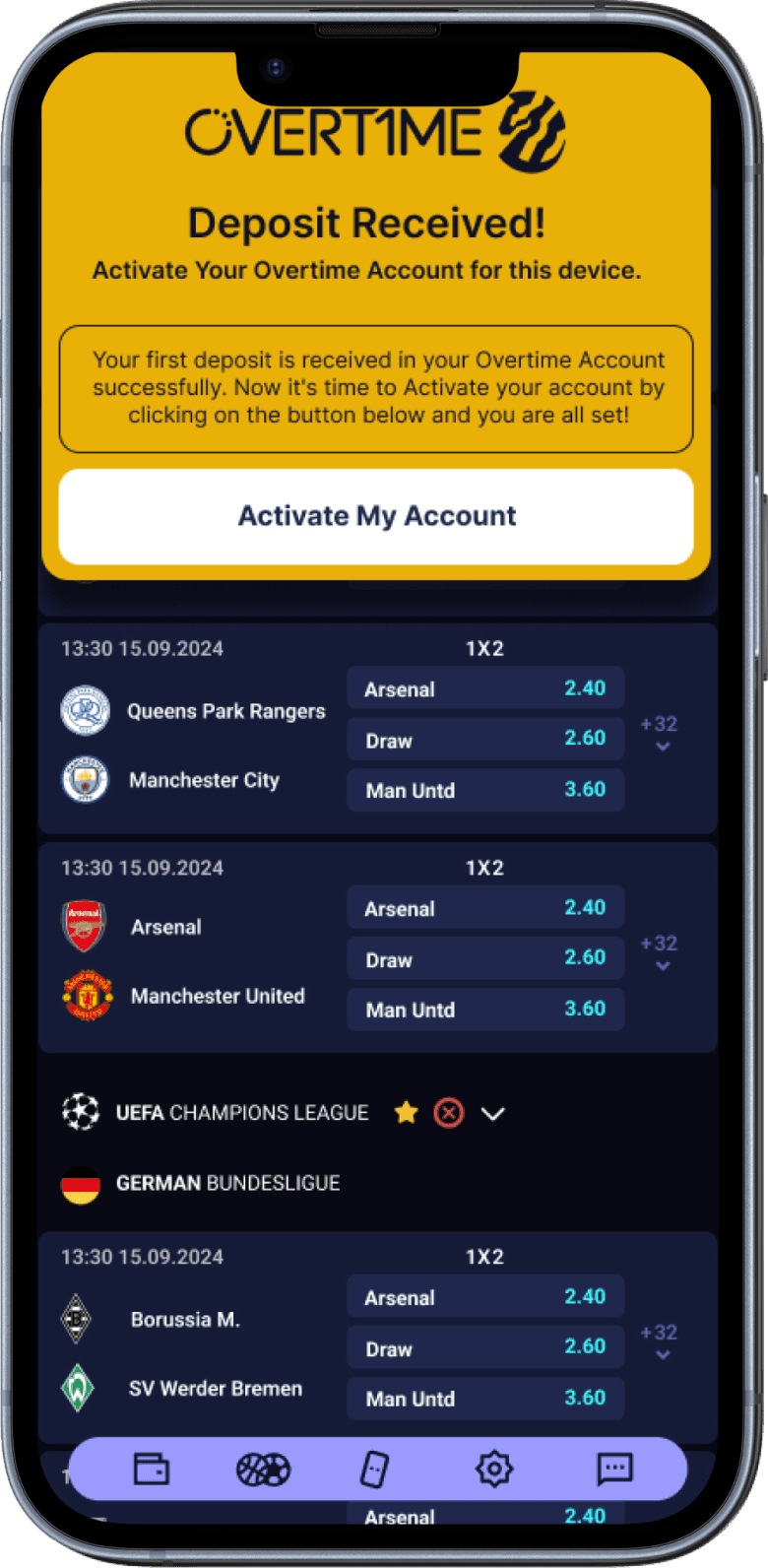
Layer 3: Invisible Infrastructure
Gas fees eliminated through gasless transactions. Transaction screens show only what matters: bet amount, potential payout, and a single “Confirm” button. No gas estimates. No network selection. No token approvals.
Results
The new redesign proved that decentralized can feel mainstream
50K+
Active users — the majority through the new social login flow
$200M+
In total betting volume surpassed
$3M+
Weekly volume (from near-zero, Jun 2024 – Mar 2025)
“Using Overtime on mobile is now as simple as any other Web2 application — the end user doesn't even know everything is powered by smart contracts on Ethereum.”
Overtime 2.0 retrospective
What I Learned
The best blockchain UX is invisible blockchain UX
Bridging Web2 and Web3 is a design problem, not a technology problem. Account abstraction is a smart contract capability, but the reason it works for users is because of the UX decisions layered on top of it. The technology enables; the design delivers.
Transparency builds trust, but only when it's opt-in. Crypto users want to see the chain, the contract, the proof. Mainstream users want to see the odds, the payout, the balance. I learned to design for both by making blockchain details accessible but never mandatory — a “Details” link rather than a blockchain receipt on every screen.
Continuous iteration is non-negotiable in Web3. Wallet standards changed, new L2 networks launched, gas fee structures shifted — all while we were live. I built the design system with enough modularity that we could swap out the deposit flow's supported tokens without redesigning the entire module.